A value-oriented study exploring how digital tools can meaningfully support parents of hospitalised children — addressing the emotional and practical gaps in a healthcare system that treats relatives as resources rather than people in need.
01 — Challenge
My master's thesis explored how serious childhood illness places the entire family in a state of crisis. Yet the healthcare system is primarily designed to treat the patient — leaving parents and relatives to navigate overwhelming emotional and logistical demands largely on their own. They are expected to be fully present, informed, and capable, even as their own wellbeing deteriorates.
This project addressed a critical gap: healthcare systems routinely treat relatives as resources rather than people with needs of their own. Parents of seriously ill children struggle to prioritise their own health because of the relentless emotional strain they carry. Simply providing medical information through an app does not address this — it deepens it.
"What is important to consider when designing digital support for parents of children in hospital care?"
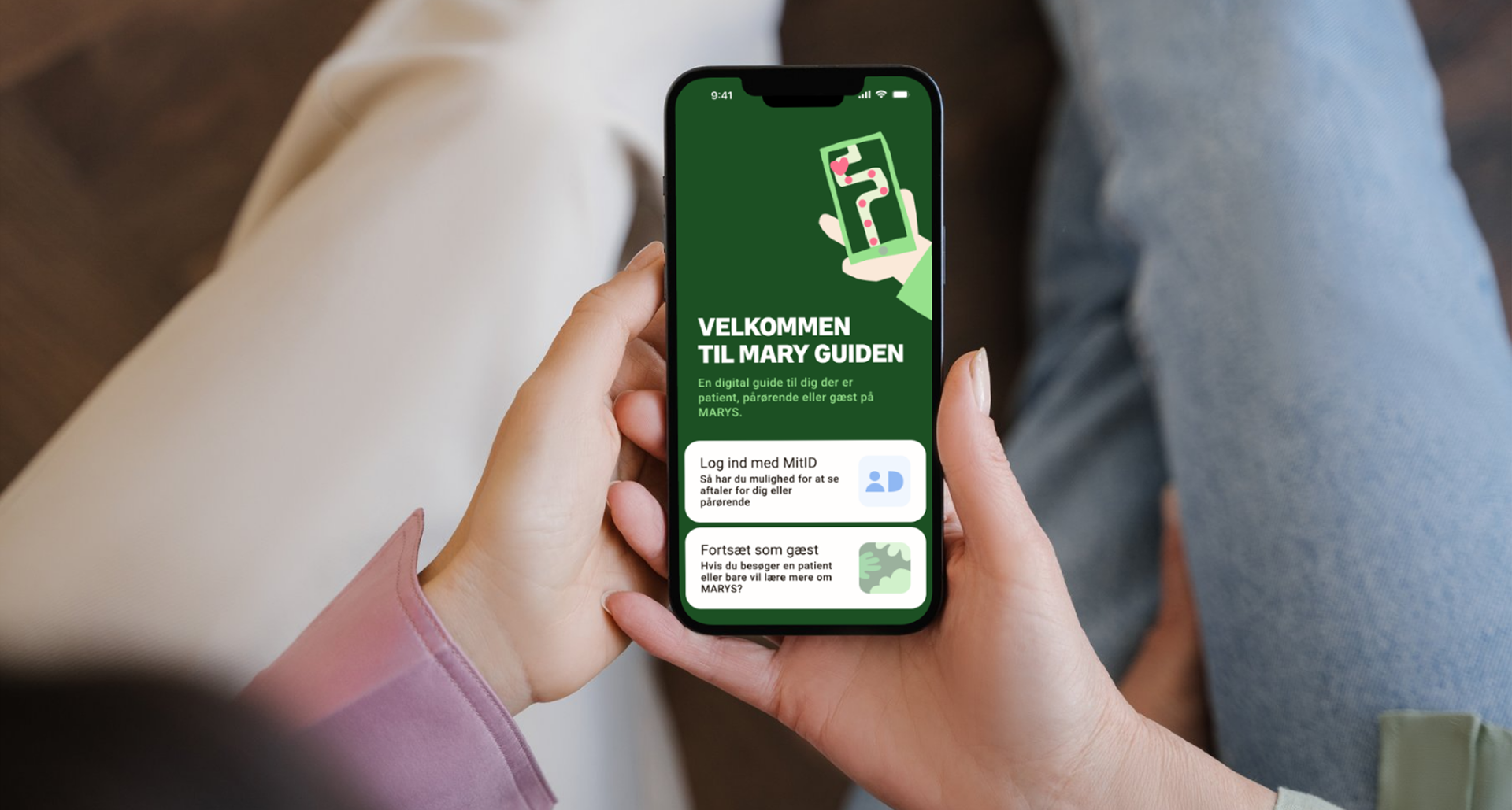
The project centred on this research question, exploring how a digital tool could offer meaningful, tailored support — not just information — to parents during a child's illness trajectory. The result was the MARY Guide: an onboarding flow designed for Mary Elizabeth's Hospital (MARYS), a specialist facility for children, young people, and pregnant women.
02 — Design Process
Rather than following a fixed brief, this project used a hypothesis-driven approach. The design direction was continuously reshaped by research findings, ethical reflection, and iterative experimentation — guided by the Design Ethically Framework throughout.
The process began with qualitative research: contextual interviews with parents and hospital staff to understand the lived experience of crisis care from the inside. Rather than approaching this as data collection, interviews were framed as conversations — creating space for the emotional reality of the situation to surface alongside practical needs. These conversations became the foundation for every design decision that followed.

Insights from research were translated into explicit design hypotheses — testable assumptions about what parents need and what design could realistically offer. Mapping these hypotheses made the implicit explicit: it forced the team to articulate what we believed, why, and where those beliefs might be wrong. This phase grounded the project in evidence while leaving room to be challenged.

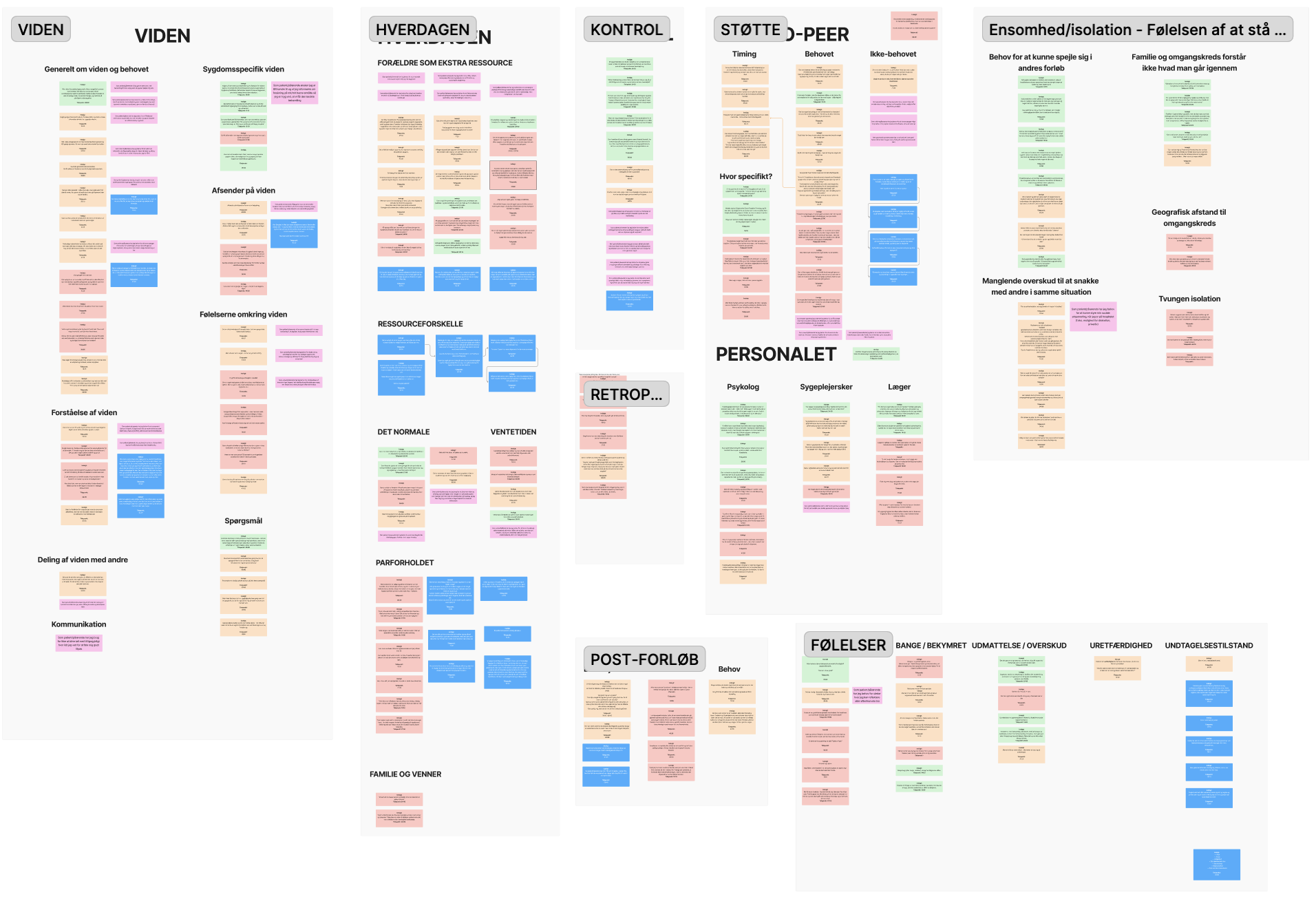
Research was synthesised through affinity mapping, clustering findings by theme to reveal patterns across interviews. This led directly to a set of How Might We (HMW) questions that reframed challenges as design opportunities. The synthesis stage was critical for moving beyond individual stories to a shared understanding of what the design needed to address — and what it had no business trying to solve.
With a clear problem space established, ideation moved into rapid sketching. Concepts were generated quickly and without constraint — exploring different framings of what a support tool could look like and how it might interact with parents' existing routines. Sketches were used as conversation starters: imperfect, provisional, and deliberately open to critique. This phase prioritised quantity and divergence before any commitment to a direction.
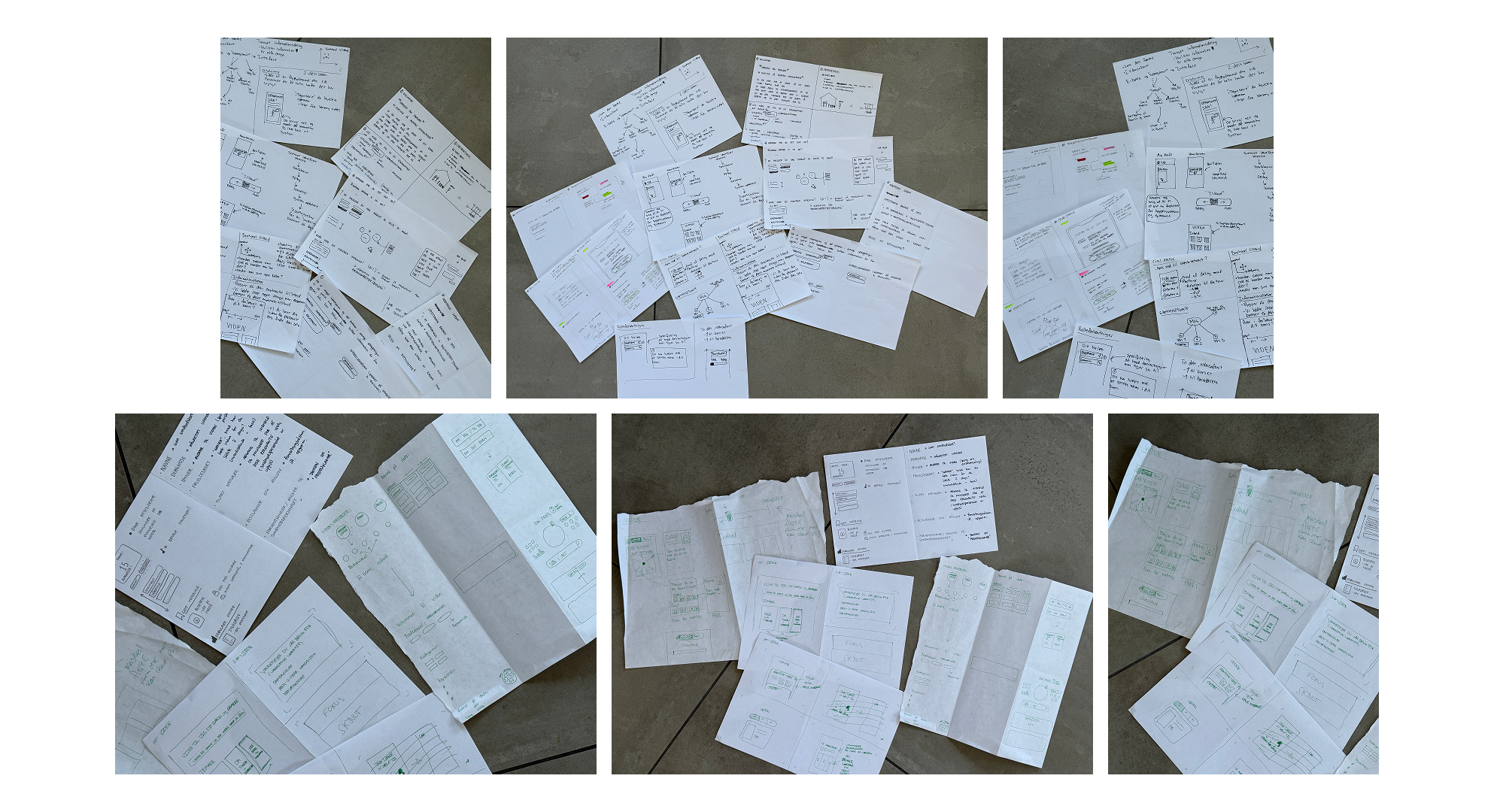
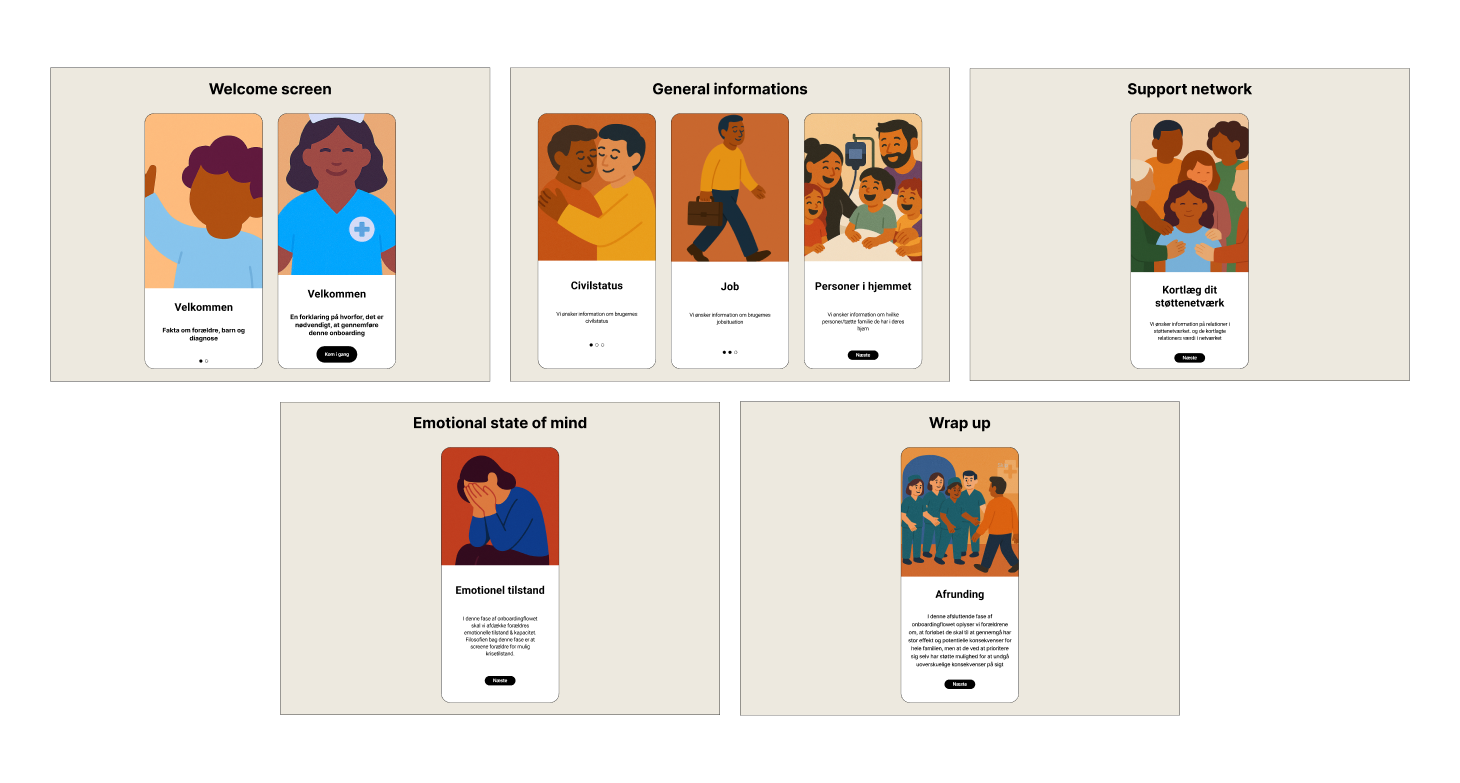
Sketches were then translated into a storyboard — mapping the five-step onboarding sequence as a series of low-fidelity screens to validate the flow before moving into high fidelity design.
03 — Result
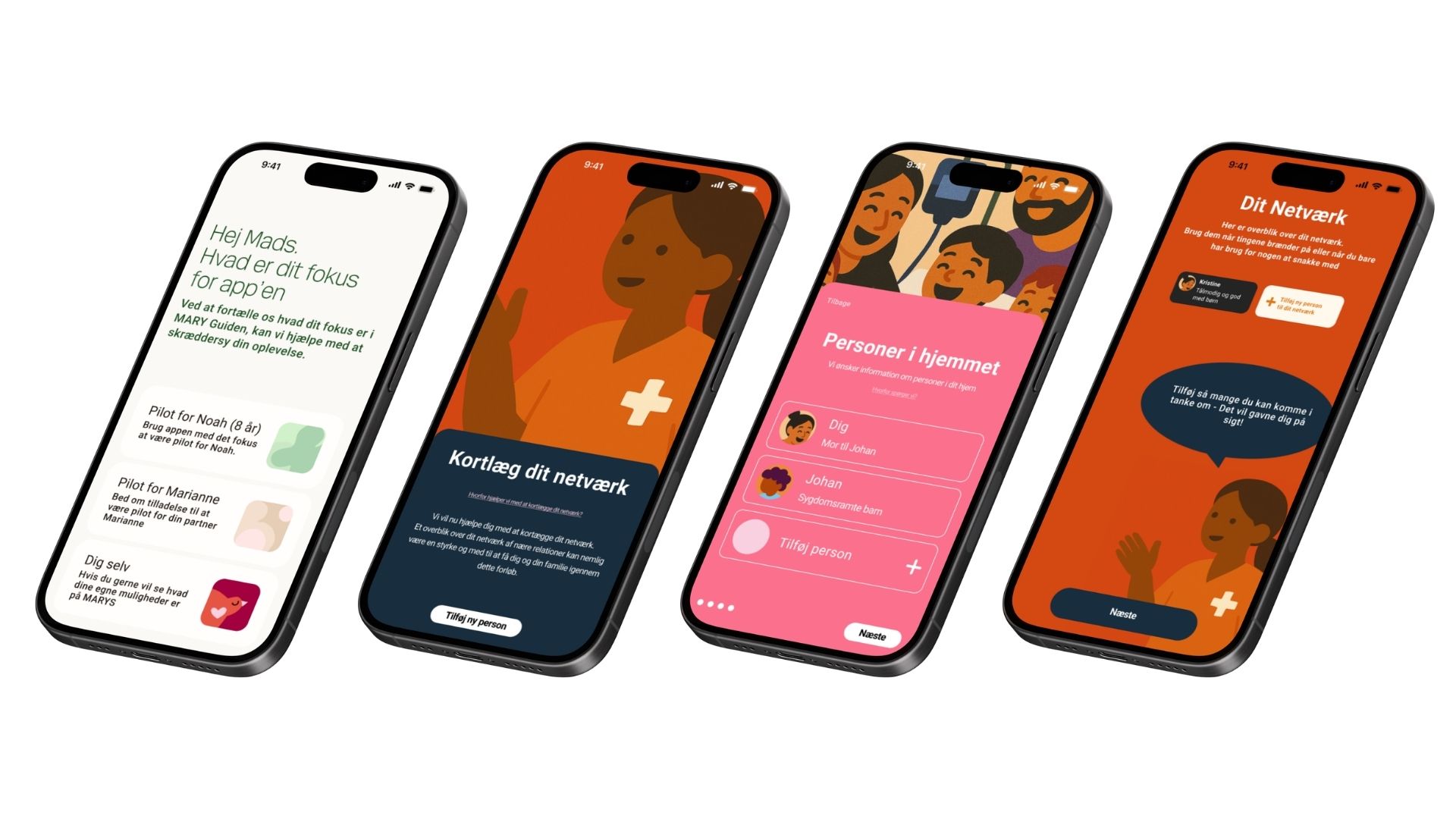
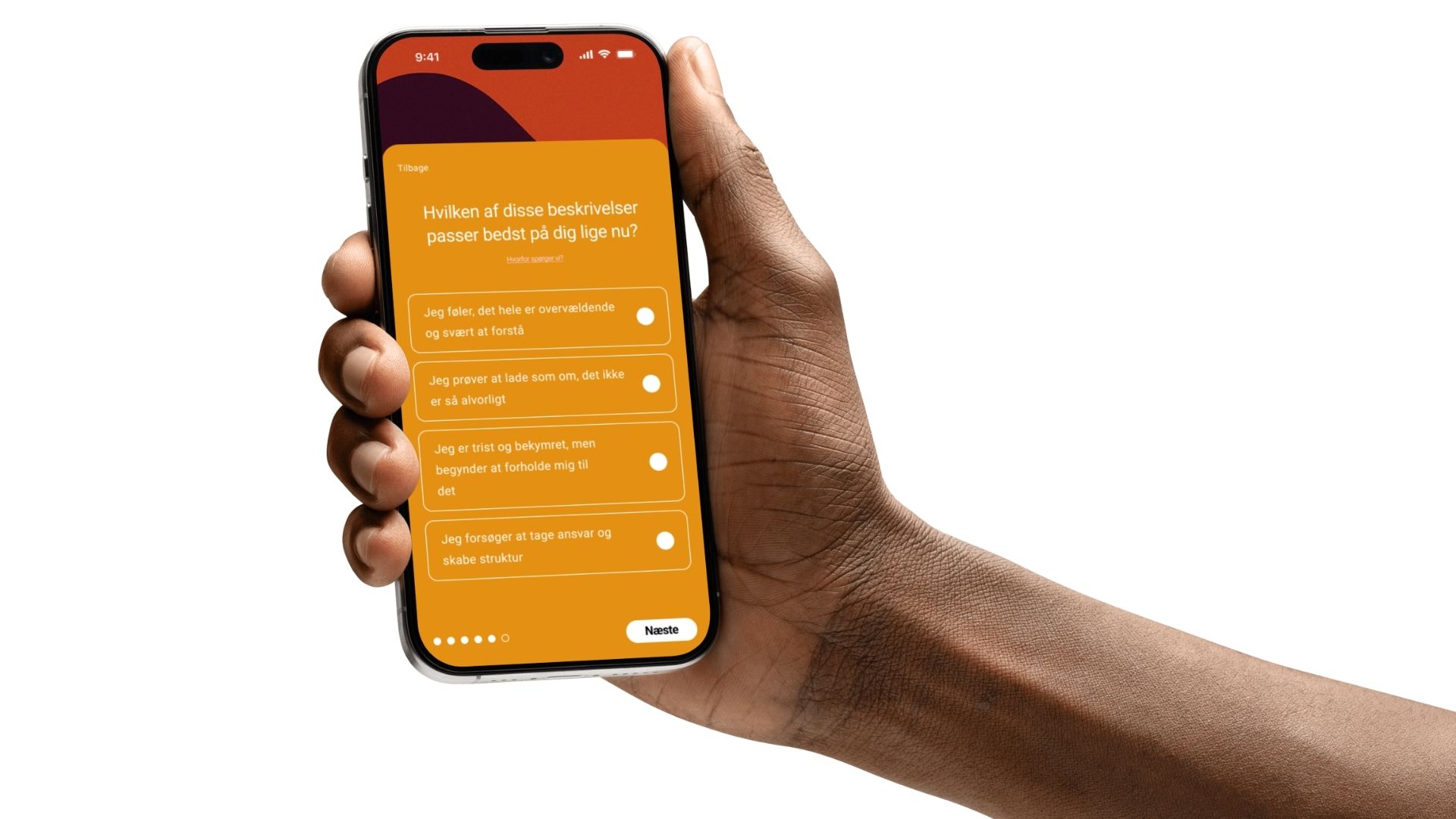
The most promising direction was developed into a high fidelity prototype of the MARY Guide onboarding flow. Three principles shaped the design: exploring individual capacity and parental needs, clarifying caregiver role expectations, and providing tailored support based on user input. Rather than a finished product, the prototype functioned as a value-driven design probe — a tool for generating insight into how parents engage with healthcare technology during crisis.
The five-step onboarding sequence begins by asking rather than telling — exploring the parent's individual situation before offering anything. Each screen listens before it advises.